Collaborative study · Used by classmates
MAGS
Course-specific notes, practice tests, and multiplayer quiz battles.
- Role
- Solo developer
- Year
- 2026
- Stack
- Next.js · React · TypeScript · Convex · Vercel
Overview
I built the initial reviewer on Tuesday night, October 6, 2026. Batchmates used it on Wednesday and Thursday to prepare for our October 8 Enterprise Architecture midterm. The product evolved through feedback on joining, question variety, and navigation.
Includes structured notes, flashcards, practice explanations, browser-local scores and history, and nickname-based multiplayer. The current feature set was not all built in one night.
A Vercel screenshot recorded 130 visitors and 1,029 page views for October 7–8, 2026. These are platform traffic figures, not a count of unique classmates or evidence of improved grades. The course reviewer is not linked here.
From an initial reviewer to real use
The initial reviewer started on October 6, 2026, with a concrete need: help us prepare for an approaching Enterprise Architecture midterm. Classmates used MAGS on October 7 and 8. A Vercel analytics screenshot recorded 130 visitors and 1,029 page views for that exact October 7–8, 2026 reporting window. Those are platform traffic metrics, not a count of unique classmates or evidence of improved grades. The current feature set developed beyond the initial Tuesday-night build.
Improved through classmates' feedback
Real use exposed friction in joining battles, the variety of practice questions, and moving between study activities. I improved party discovery and joining, expanded question variety, and refined navigation based on classmates' feedback. MAGS is distinct from LancePad: it is a shipped reviewer tailored to a specific course, with classmates actually using its study and multiplayer workflows.
A foundation for the next exam
Next.js, React, and TypeScript organize the study experience, while Convex supports shared multiplayer state and Vercel hosts the separately deployed reviewer. Solo scores and test history remain local to each browser. The module structure is prepared for future finals content while retaining earlier study materials and progress. This portfolio presents the product as a case study; the reviewer and its institutional course materials are not linked here.
Study, practice, and revisit mistakes
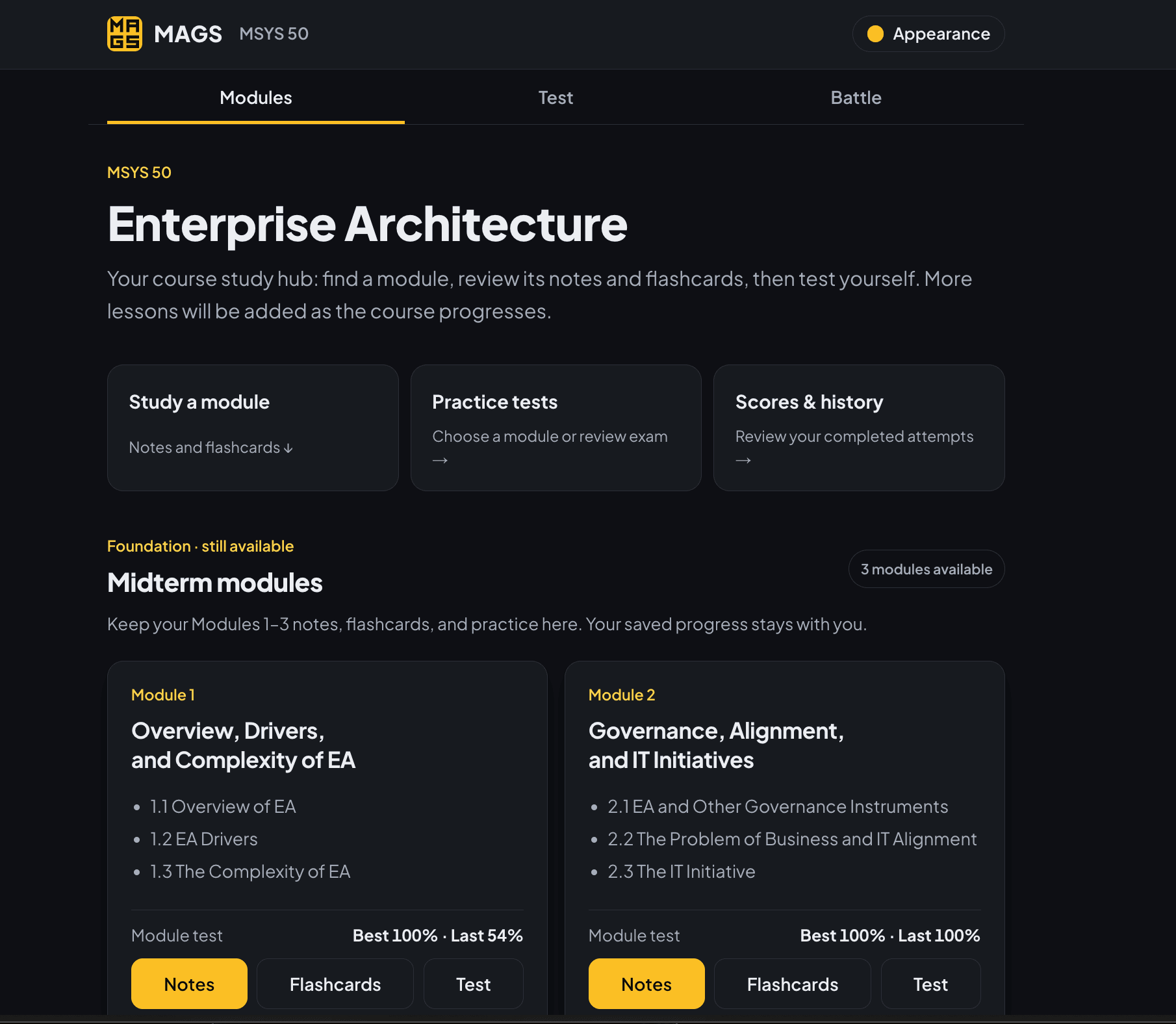
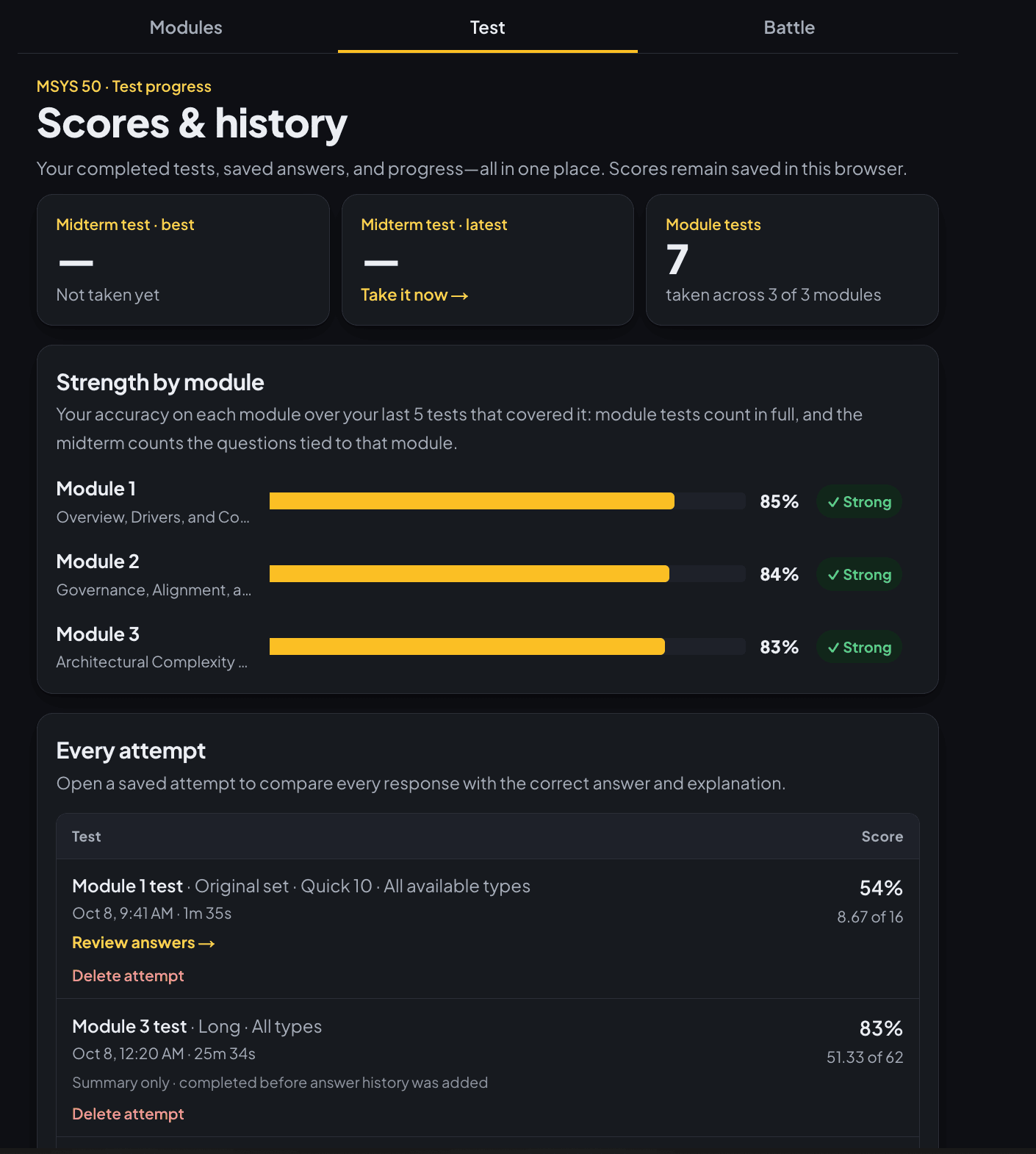
Structured modules connect notes and flashcards with varied practice questions, answer explanations, and the option to retry mistakes. Solo scores and test history are stored in the browser, so learners can revisit completed attempts. The hub separates module study, practice tests, and scores and history, and leaves room for future finals modules.
Keep course material easy to navigate
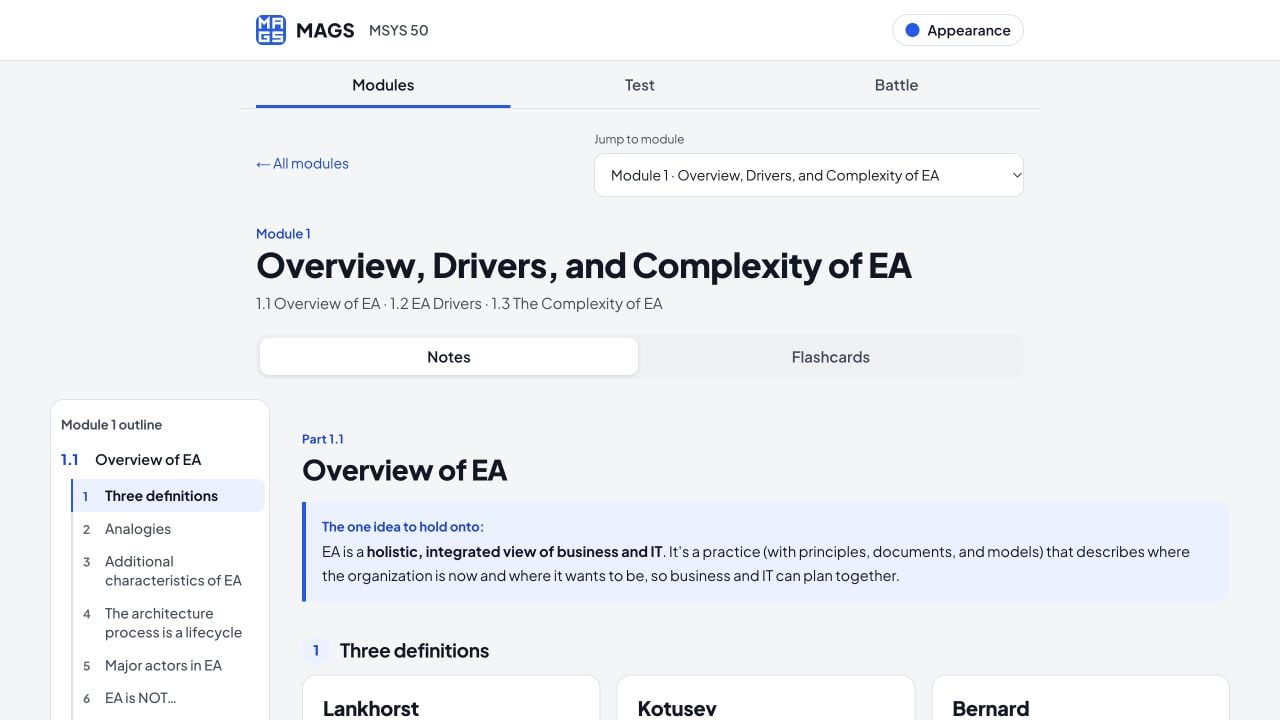
Each module pairs structured notes with flashcards. A section outline and module selector help learners find a topic and move through the course without losing their place. Navigation improvements came from classmates' feedback during exam preparation.
Make studying a shared activity
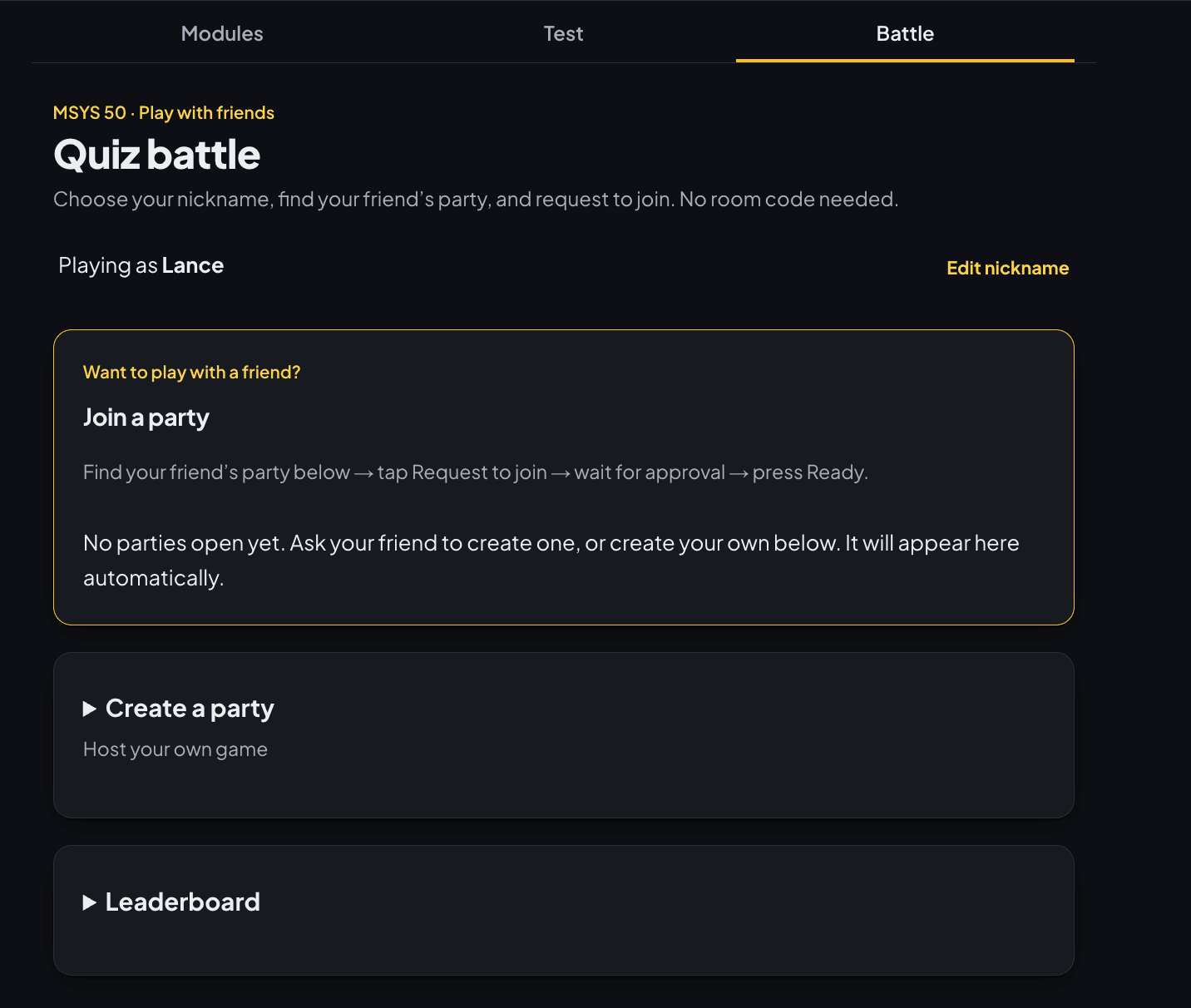
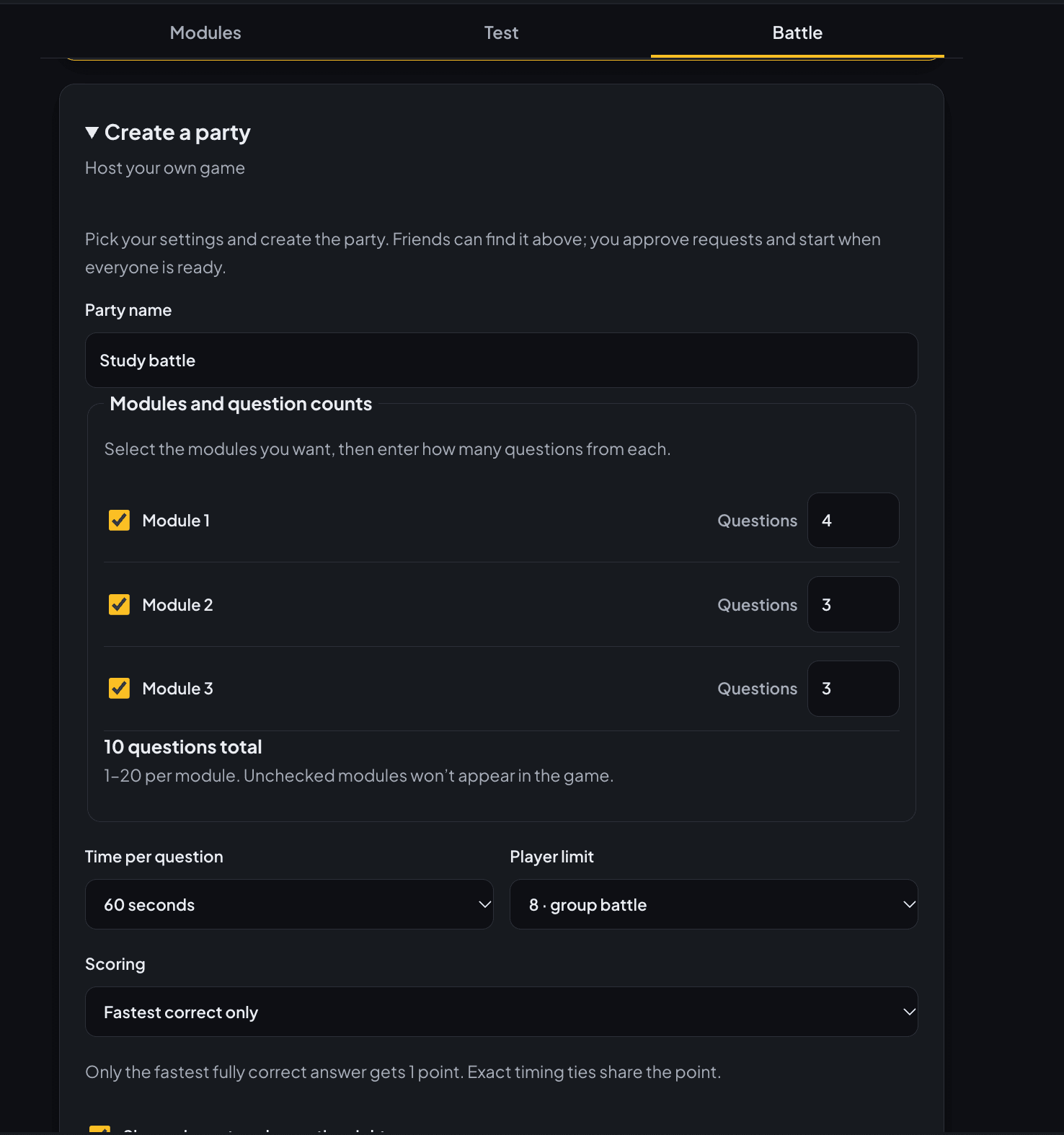
Nickname-based multiplayer lets classmates discover parties, request to join, and wait for host approval. Hosts configure modules, question types, timing, player limits, and scoring. Leaderboards, match history, and podiums complete the battle experience. Feedback informed easier joining and clearer navigation. The screenshot illustrates the entry flow rather than a live battle or match result.
Return to previous attempts
Scores and test history stay in the learner's browser. Module summaries help identify what to revisit, while saved attempts provide a route back to answers and explanations. The displayed numbers illustrate this workflow, not class-wide outcomes.
Let the host shape the session
Hosts choose which modules to include, how many questions to draw, the time per question, player limit, and scoring rules. Discoverable parties and host-approved joins make the session easier to organize without sharing room codes.
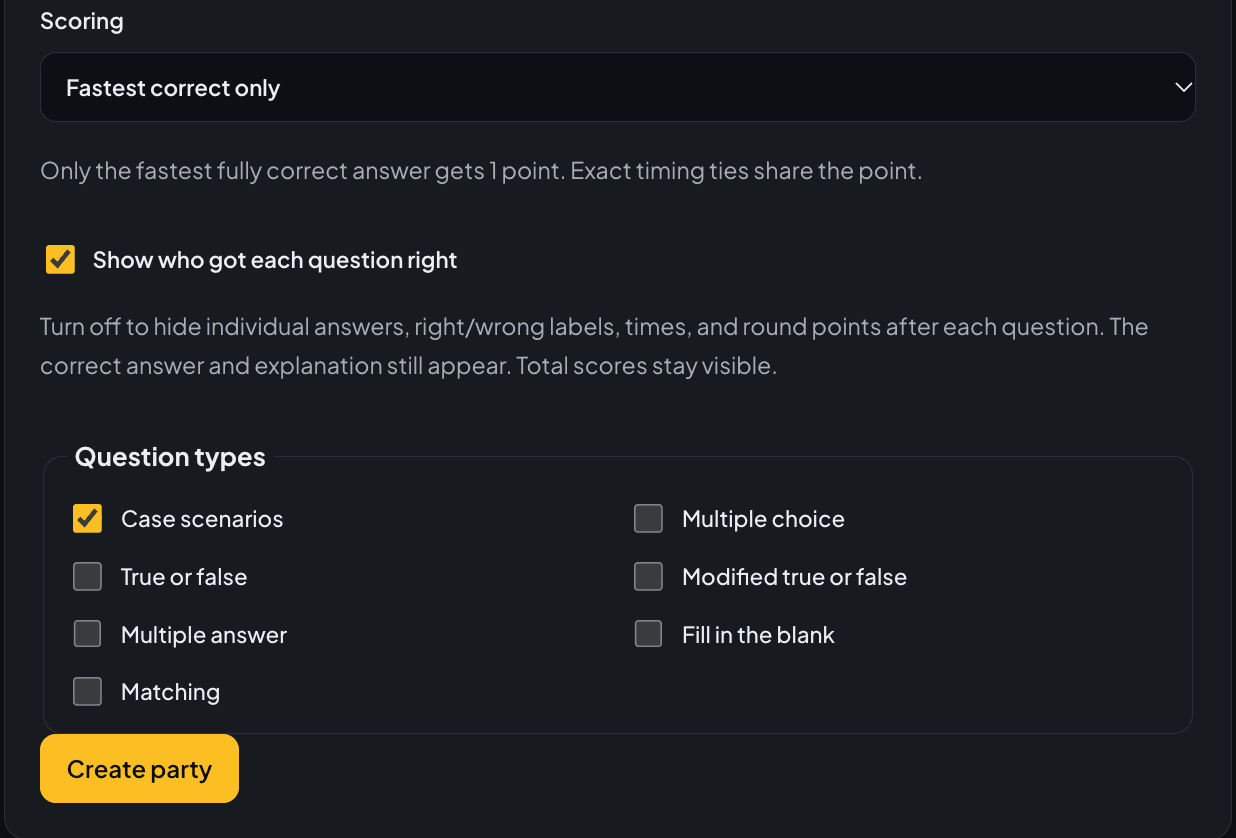
Make practice varied and configurable
Hosts can select question formats and choose whether individual answers, correctness, timing, and round points are visible. Explanations and total scores remain available. Question variety was one of the areas refined through classmates' feedback.
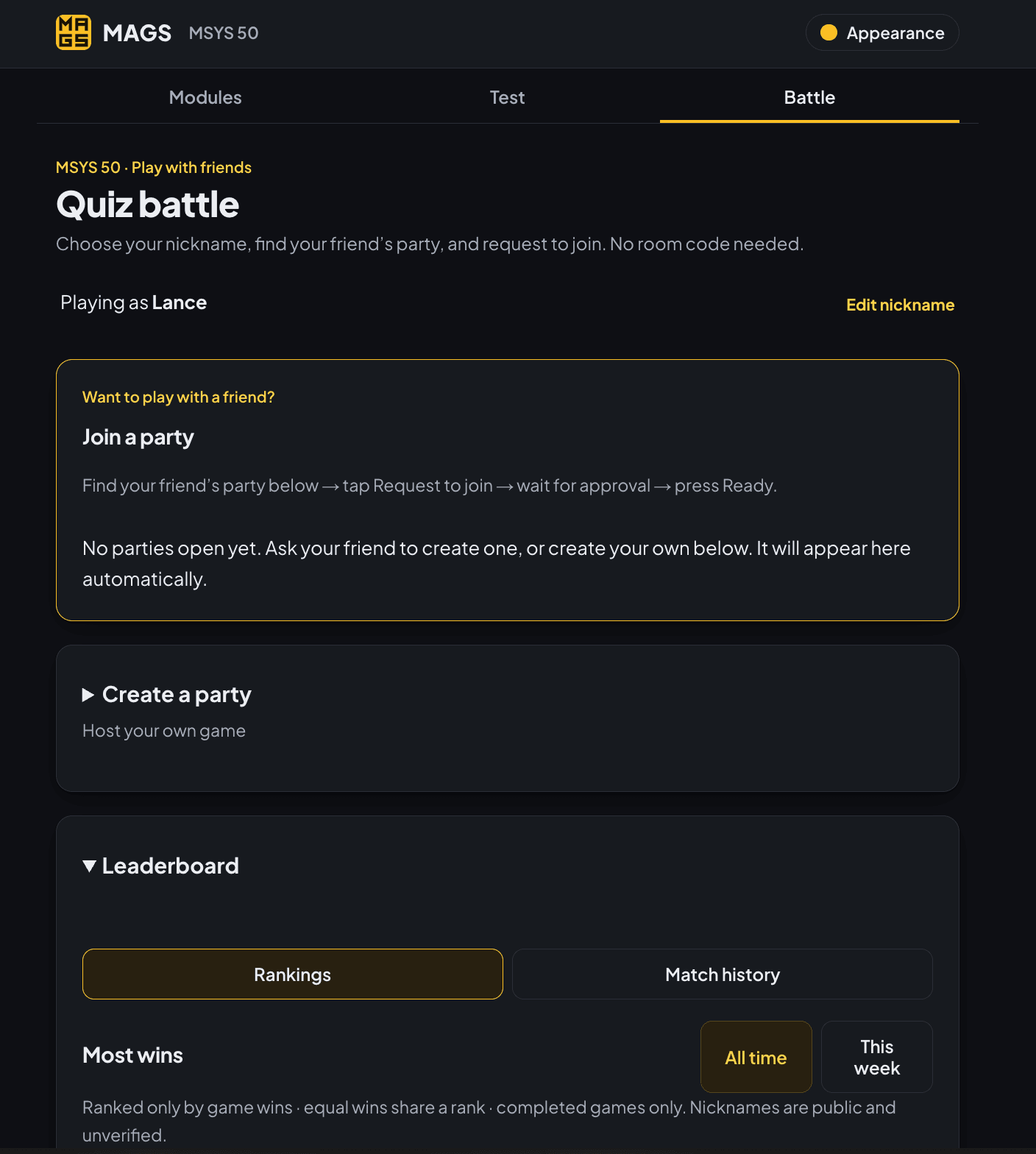
Keep shared results easy to find
The leaderboard separates rankings from match history and offers all-time and weekly views. This capture shows the navigation without exposing classmates' nicknames or results. Podiums belong to the completed-match experience and are not pictured here.